
Skip to content
BETANew tools land regularly — feedback is always welcome.Feedback welcome.
Greyhawk · City

Lopolla

Bazaar city and capital of Ket, where east and west meet.

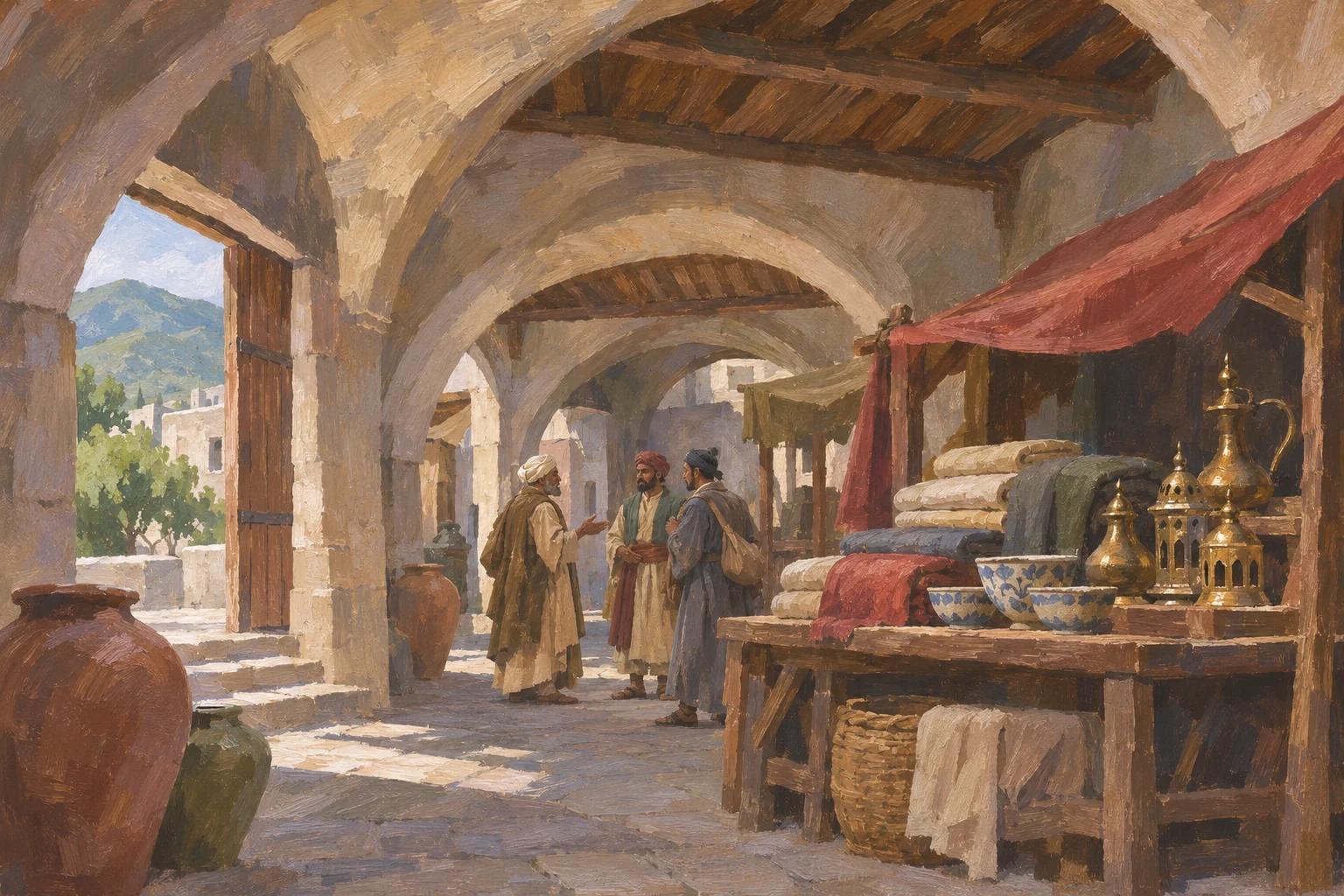
A covered bazaar in Lopolla, with merchants, cloth bales and cool light between the arches.

Lopolla, the capital of Ket, is a large Baklunish city of about 27,000 people ruled by the Beygraf. It was founded when Zeif fortified its eastern frontier, and trade roads link it with Thornward and the Flanaess. Iggwilv once plundered the vault of Daoud here, and Rary the Traitor kept his tower in the city until 584 CY.

At a glance

Realm
Beygrafdom of Ket
Region
Between the Yatil and Barrier mountains, near the Bramblewood Gap
Ruler
Beygraf Nadaid
Government
Feudal monarchy under a Beygraf
Population
About 27,300 (591 CY)

Overview

Lopolla is the capital and largest city of Ket, far ahead of Molvar, Falwur and Polvar. It is a lawful, orderly city of bazaars where Baklunish and eastern merchants meet. Its temples honour Al'Akbar, Mouqol of trade, Fharlanghn, Geshtai, Istus, Xan Yae and other Baklunish gods, which makes Lopolla a centre of the western faiths at the very edge of the Flanaess.

History

Lopolla was founded during the eastern fortification of Zeif, when Ket was still a frontier of the sultanate. Later King Tavish II of Keoland had a trade road built linking Thornward, Molvar and Lopolla. In the third or early fourth century CY the witch Iggwilv plundered the legendary vault of Daoud in Lopolla and carried off his Wondrous Lanthorn; the outraged citizens drove her into exile. The archmage Rary the Traitor lived in a tower in Lopolla for years; after his betrayal in 584 CY the tower vanished and reappeared months later in the Bright Desert.

At the table

  • Pieces of Daoud's plundered vault still turn up in the bazaars — and someone is collecting them.
  • The empty site of Rary's tower attracts thieves, scholars and agents of the Circle of Eight.
  • A caravan from Lopolla to Thornward crosses tense ground where Ket, Bissel, Veluna and the Gran March all claim a say.

In the timeline1

Back to the wiki Full timeline