-1408 CYAge of Glory
The Touv Calendar
In Hepmonaland the first Touv king, Onatal, is crowned in Kundanol. He unites the tribes as King of the Cities and founds the Kingdom of Kunda; the Touv credit their calendar to the god Katay.
The dark-skinned people of Hepmonaland, heirs of the ancient Kingdom of Kunda.
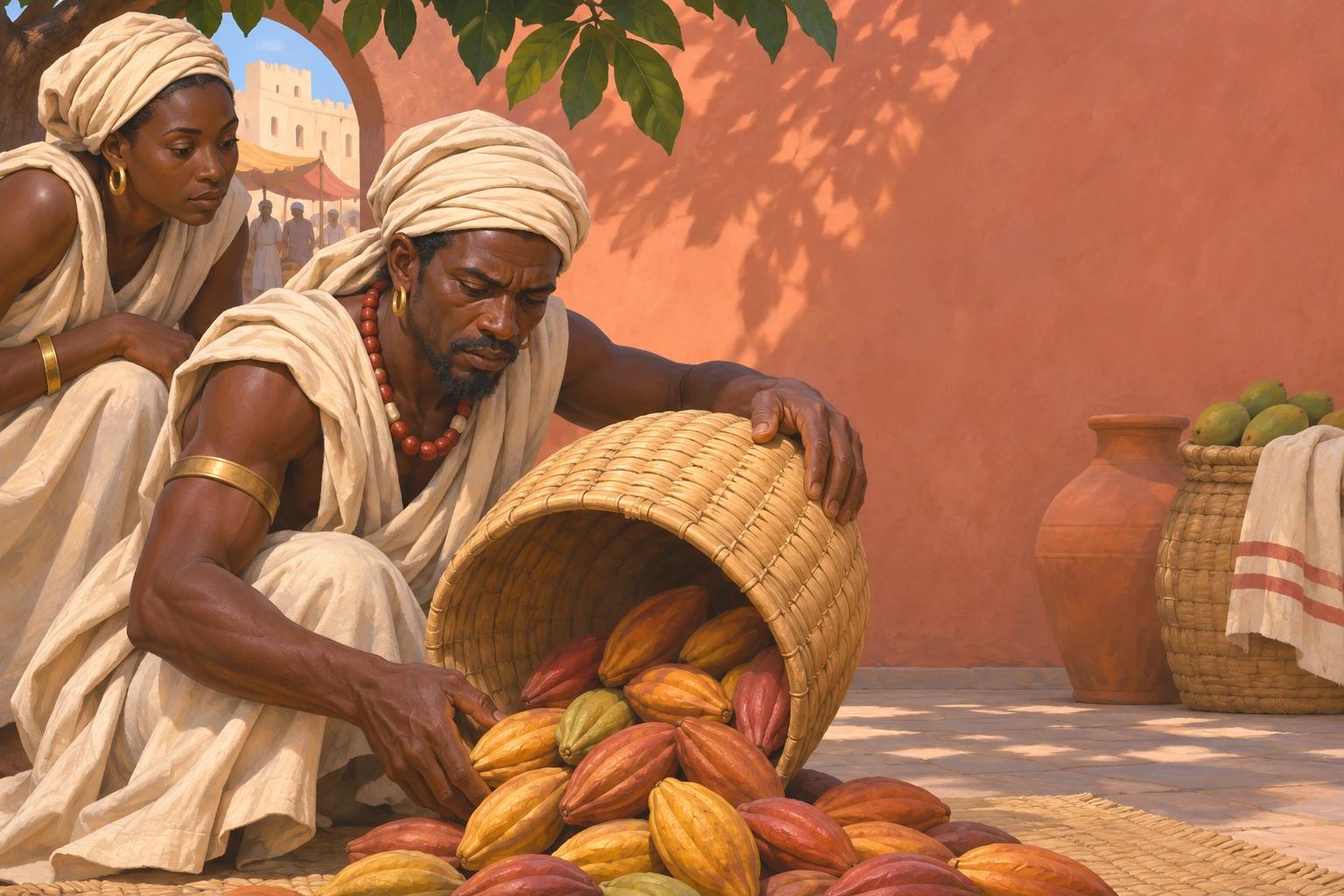
The Touv are a people of Hepmonaland with their own language, calendar and pantheon led by Uvot. Heirs of the ancient Kingdom of Kunda, they war with the Olman over slavery and sacrifice and have built cities in Hepmonaland and the Amedio Jungle.
Touv names a people, a subspecies of humans in Hepmonaland, and also their language and culture; they keep time with the Touv Calendar. In The Scarlet Brotherhood (1999), Sean K. Reynolds describes them with dark brown or black skin, blue or brown eyes (black ones are rare), straight or wavy hair and rounded faces. They are usually shorter than most people of the Flanaess, the tallest reaching about 5'10". Most men are beardless, though some subgroups grow narrow chin beards.
Traditional Touv society is organised in tribes and subgroups. The tribes were united in the Kingdom of Kunda, which arose about -1408 CY – the start of the Touv Calendar – and lasted a little over 1,200 years. After its fall, tribes gathered around several city-state domains in Hepmonaland; small tribes often live inside a country's borders while claiming independence, and reclusive tribes still hide in the deepest jungles. People of Touv descent can be found anywhere in the Flanaess.
The Touv pantheon comes from Hepmonaland and is led by Uvot. Its best-known gods are Berna, Breeka, Damaran, Katay, Kundo, Meyanok, Nola, Uvot, Vara, Vogan and Xanag. Numerous lesser spirits – of single landforms, plants and animals – belong to it as well; many shamans learn the ways of the spirits vital to their people's survival rather than following the greater ones. These beings are true gods, not invented spirits.
Touv is a complex polyglot of tribal tongues with many words for the same thing. Wide trade among the Kundali nations keeps it growing and understandable everywhere despite regional differences; it is easy to pick up in pieces but hard to master, and its script is phonetic. It is spoken in all former nations of Kunda still under human control. In the northern jungles the Touv war with the Olman over the Olman Empire's slave-taking and ritual sacrifice, and they have built cities in Hepmonaland and the Amedio Jungle.
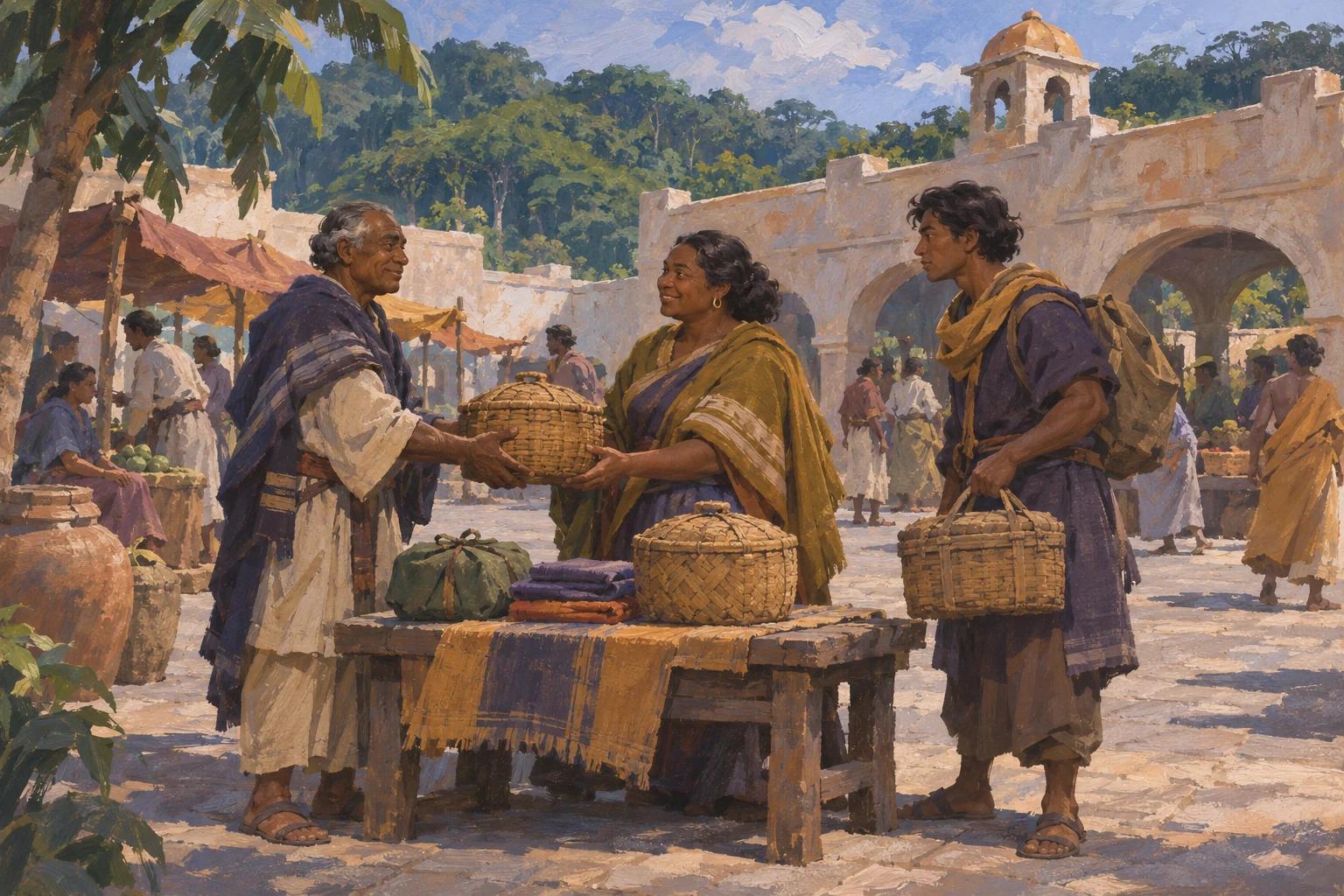
In Hepmonaland the first Touv king, Onatal, is crowned in Kundanol. He unites the tribes as King of the Cities and founds the Kingdom of Kunda; the Touv credit their calendar to the god Katay.
The Scarlet Brotherhood begins enslaving the Olman and Touv peoples of Hepmonaland and recruits its Suel tribes as soldiers.
In the lands of the Sea Princes, freed Olman and Touv slaves rally at Kusnir behind the Touv leader Utavo the Wise. The Scarlet Brotherhood under Herdsman Krevaradan retakes the town with summoned devils, but Utavo returns, conjures demons with the help of an ancient jewelled gauntlet and has Krevaradan torn limb from limb.